Caramelized Onion Challah
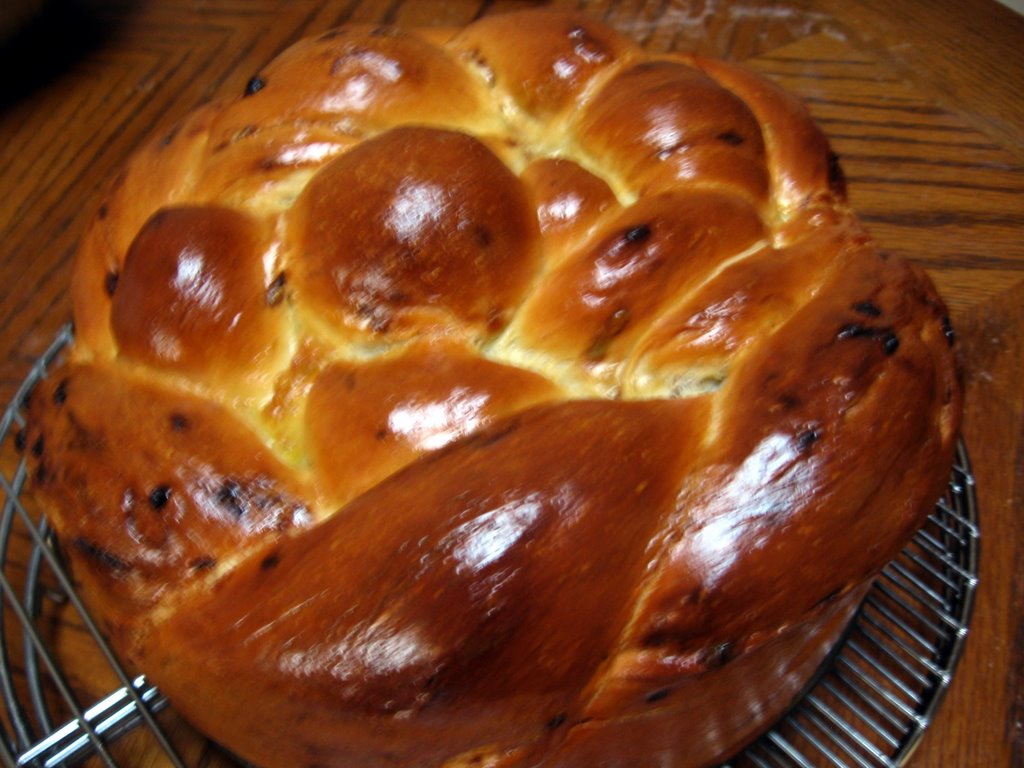
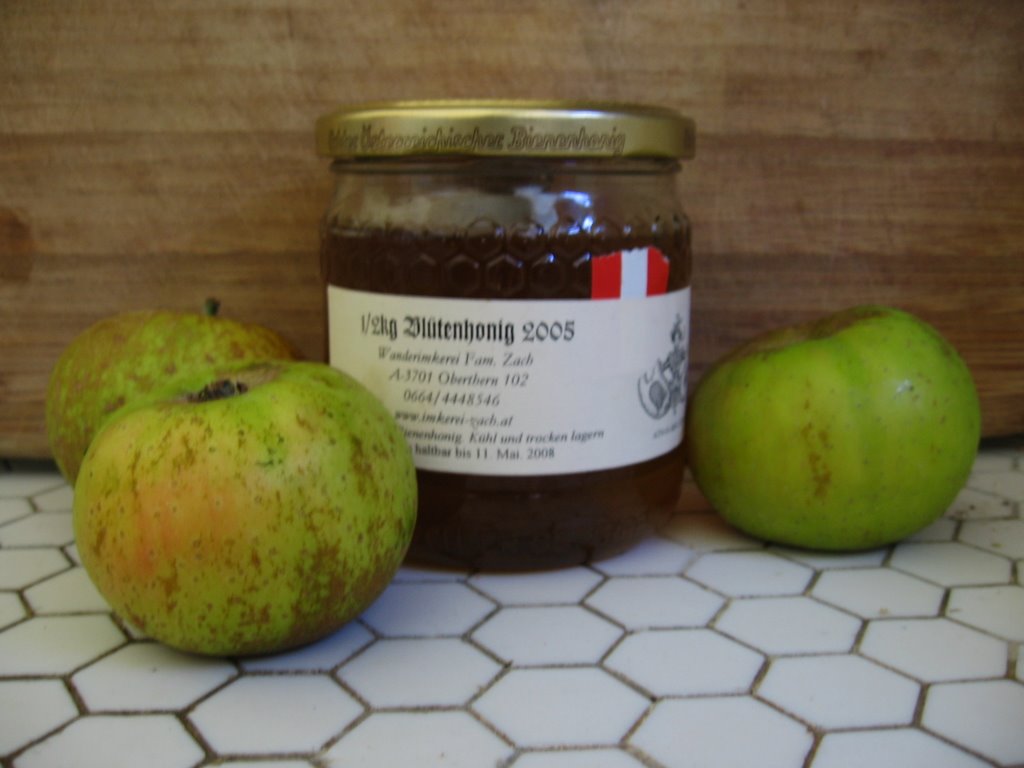
Challah is a traditional egg bread in the European Jewish tradition. It is typically eaten at the meal marking the beginning of the Sabbath, the day of rest, and sometimes at other celebrations. It usually braided to symbolize unity and on Rosh Hashannah it is braided and made into a circle to recall the cycle of the year. Traditionally, challah should not be cut with a knife because it is seen as a form of violence or if it is the Sabbath, work on what ought to be the day of rest. Instead, it is passed around the table family-style, so everyone can grab a chunk. On Rosh Hashannah, it can also be dipped into honey, like apples, to symbolize a sweet new year. This is as I know it though. Each Jewish cultural group, of which there are many, has its own traditions and explanations
Caramelized Onion Challah by Jan Weimer
10 TB chicken fat (schmaltz) or butter
4 cups diced onions
2 1/4 tsp dried yeast
3 TB sugar
2 cups warm water, divided
2 TB kosher (of course) salt
3 large eggs, room temp
4 cups unbleached flour
4 cups bread flour
1 large egg, blended with 1 TB water
Melt 2 TB schmaltz (or butter) in a large pan with a lid over medium-low heat. Add the onions and cover and cook until very soft, about 30 minutes. Uncover and cook until brown, about 25 minutes, stirring frequently. Set aside and cool completely.
Melt 8 TB scmaltz (or butter) and cool to 110F.
Place yeast and sugar in bowl of mixer fitted with a paddle attachment. Add 1/2 cup of water and mix until yeast is dissolved. Gently mix in remaining 1 1/2 cups water, salt and cooled fat (or butter). Mix in 3 eggs, one at a time. Add flour, one cup at a time, beating well after each addition and scrap down sides of bowl.
Change to dough hook and knead 20 minutes of until dough is very smooth. Turn dough out onto a lightly floured surface and knead by hand one to two minutes. Place in a very large oiled bowl (trust me) and cover with plastic wrap and set aside in a cool place to rise until doubled, about 2 to 2 1/2 hours.
If you don't have a mixer, not a problem. Follow the instructions using a large bowl and a wooden spoon. It takes a considerably larger amount of elbow grease, but dare I say it, your self-satisfaction will also increase accordingly.
Punch dough down and turn out on a lightly floured surface. Knead in onions. They are full of trickery and will try to escape but after a few turns, they will bend to your will and incorporate into the dough. Try to make sure that they are evenly scattered throughout. Transfer dough to a very large (no seriously, you will thank me later) clean plastic bag, leaving room for the dough to expand and refrigerate overnight.
Grease a 12" springform pan and line with parchment paper. Heavily flour work surface.
Using floured hands, divide dough into three equal pieces. Flatter each piece into a rectangle and roll each into a four-foot long cylinder. Dough will resist and shrink back to its original size a few times. If it does this, wait a few minutes to let it rest and try again. This may happen a few times. Pinch cylinders together at one end and braid loosely, pinching ends together. Starting at the finished end, coil braid into a circle that will fit your pan. Brush end with egg mixture and press into braid. Transfer to prepared pan and cover with a bath towel. Let rise until doubled and very light, about 2 to 2-1/2 hours.
Place baking stone (or if you don't have one, baking sheet) in the oven. Preheat oven to 375F. Brush bread with egg mixture. Try to do this as evenly as possible. The glaze gilds the bread and when it comes out of the oven, it's very easy to see which parts didn't get the egg wash. Place bread in pan atop the stone (or sheet). Bake 20 minutes. Gently remove bread from pan (careful, this part is tricky). Brush again with the egg wash. Return bread to oven and bake 50 to 55 more minutes or until challah is well browned. If you have a thermometer handy the internal temperature of the bread will be 200F. Cool bread on a wire rack.
Labels: Baked Goods, Jewish, Recipe
posted by Meredith at 8:37 AM
1 comments